For investors
You are buying more than the numbers
Underperforming technology, hidden cost, and integration that quietly loses the value the model assumed. Lens gives investment teams one place to test what they are buying, then hold the portfolio to what was promised.
The problem
Risk arrives late and leaves no trace
Diligence starts once the timetable is fixed. Findings live in a report that is read once. By the time a portfolio company underperforms, nobody can point to the moment the risk was first visible — or whether anyone acted on it.
Buying risk you cannot see
Architecture, key-person concentration and technical debt rarely surface in the information memorandum. They surface in year two, priced into the exit.
Technology that cannot be valued
AI has made capability harder to assess. Differentiation has to be tested — proprietary data, workflow depth, model dependency, reproducibility — not accepted from a slide.
Integration that loses value
The synergies underwritten at signing depend on integration work nobody has yet owned. The plan is usually built after the findings have gone cold.
Cost that appears afterwards
Remediation, licensing, hiring and platform rebuild are ordinary post-close discoveries. Ordinary, and almost always excluded from the model.
Outside-in first
Know more before the data room
A great deal can be established externally: product, hiring signals, security posture, architecture, commercial claims. Early assessment shapes the questions you ask rather than the answers you are handed.
- 01
Screen before you commit
A low-risk early read on product and cyber exposure, before the fee clock and the exclusivity window start.
- 02
Form a testable hypothesis
Turn the investment thesis into a small number of decisions the diligence has to inform, and the evidence each one requires.
- 03
Take it into full diligence
The outside-in view becomes the scope. Nothing is re-derived, and the request list opens with the questions that already matter.
Across the portfolio
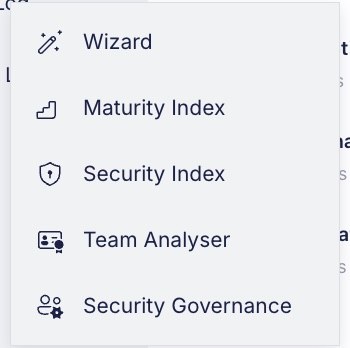
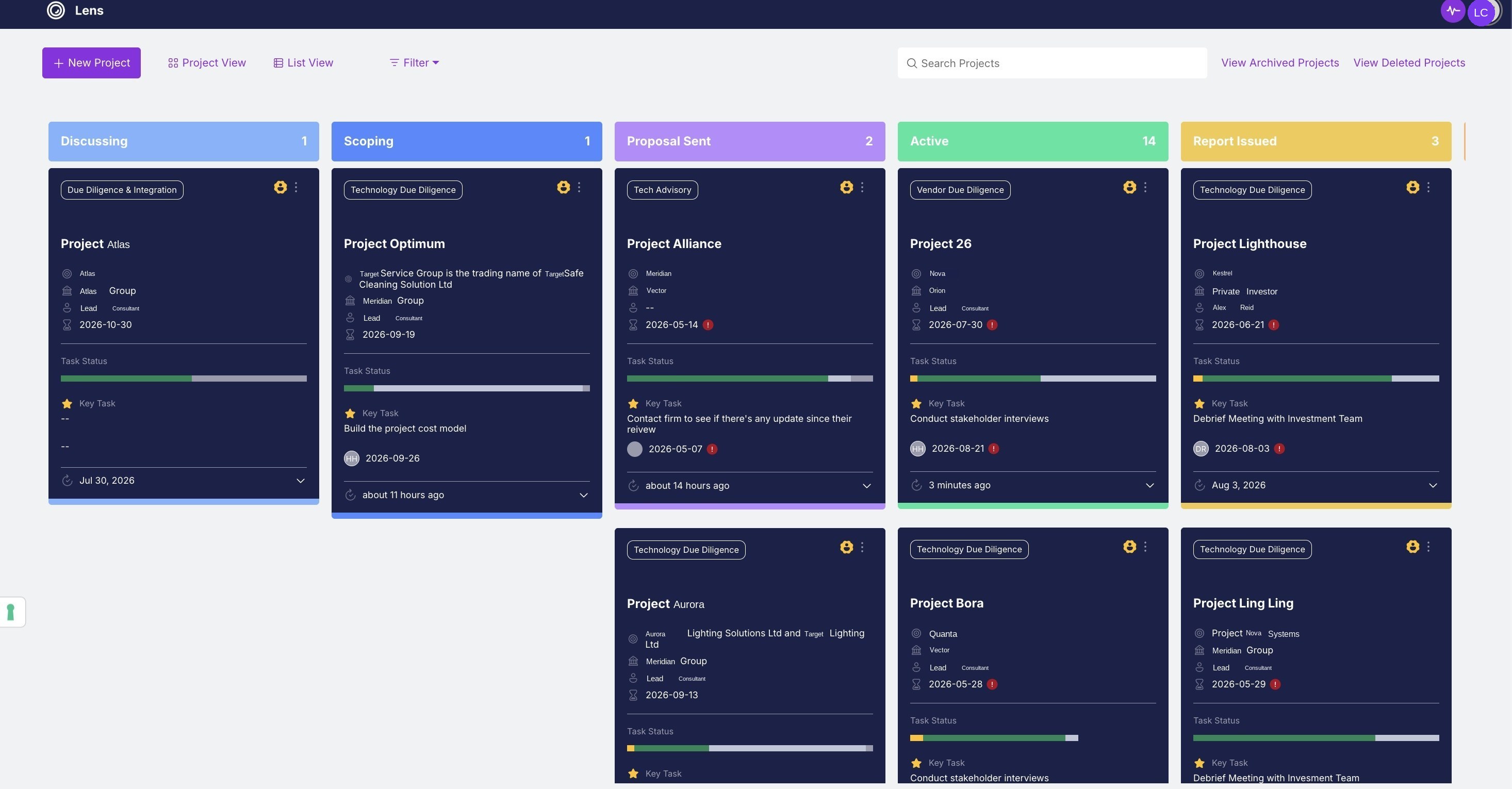
One view of every holding, on the same scale
Because every engagement runs the same workstream taxonomy and index scoring, holdings become comparable. You can see where a portfolio company sits, what changed this quarter and what the evidence behind that movement was.
Defensible by design
Every conclusion traces back to a source
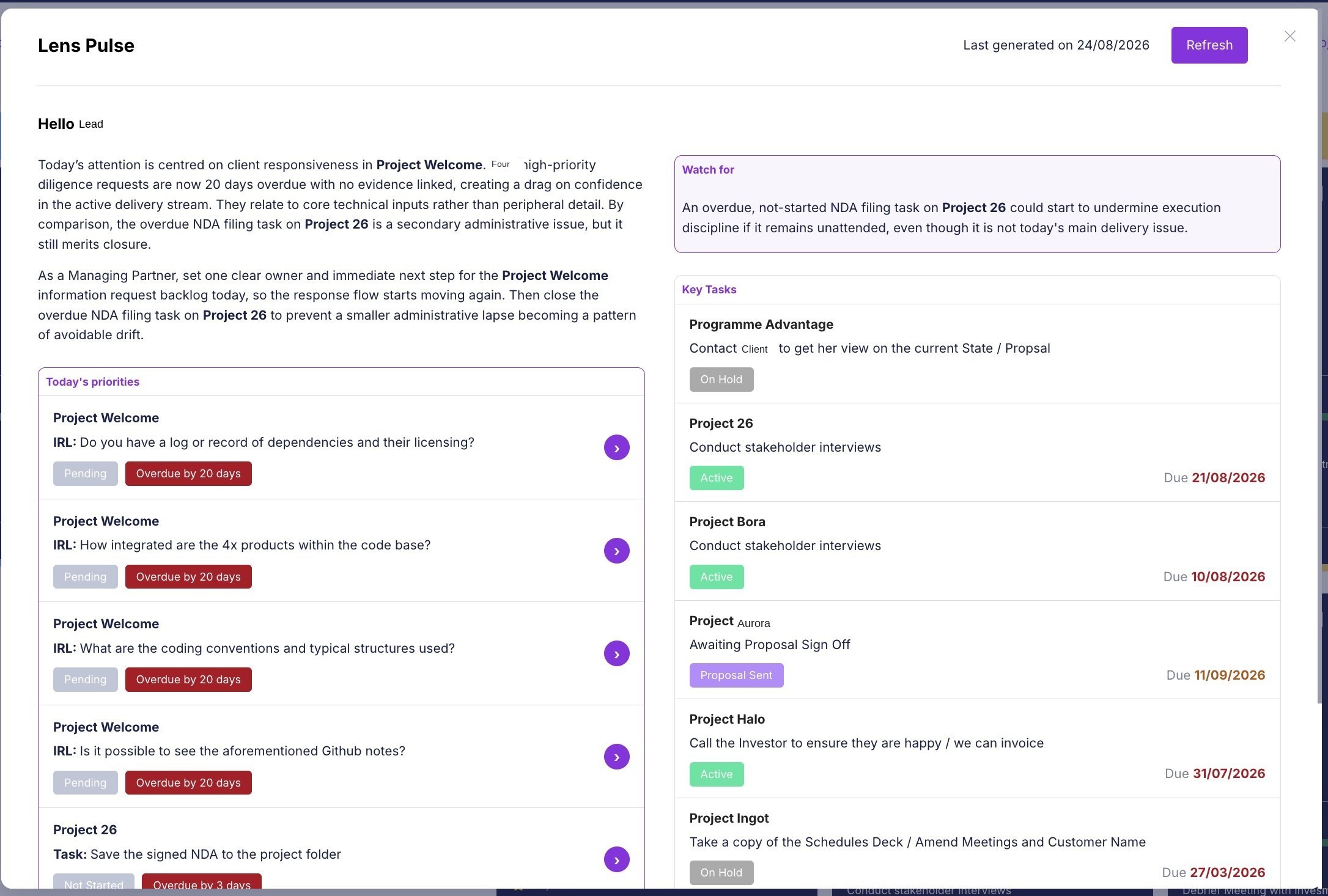
Lens answers questions from your own dataroom, interviews and journal entries, and cites what it used. That matters at investment committee, it matters at exit, and it matters when someone asks in eighteen months why a decision was made.
Evidence trail
Findings link to the documents, requests and interviews behind them. The audit trail is a by-product of the work, not a separate exercise.
IC-ready output
Index scores and workstream summaries are drawn from the same evidence the team worked from — no re-keying into a deck.
Institutional memory
What the fund learns on one deal is available on the next, rather than leaving with the adviser or the analyst.
See Lens against a live or recent deal
Thirty minutes on a structure that looks like yours — outside-in through diligence into value creation.